std::multiset<Key,Compare,Allocator>::begin, std::multiset<Key,Compare,Allocator>::cbegin
From cppreference.com
| iterator begin(); |
(1) | (C++11 以降 noexcept) |
| const_iterator begin() const; |
(2) | (C++11 以降 noexcept) |
| const_iterator cbegin() const noexcept; |
(3) | (C++11以降) |
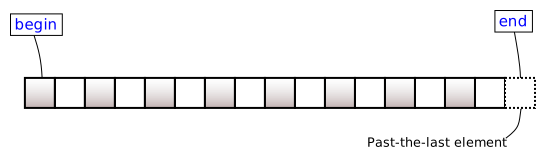
multiset の最初の要素へのイテレータを返します。
multiset が空の場合、返されるイテレータは end() と等しくなります。
目次 |
[編集] 戻り値
最初の要素へのイテレータ。
[編集] 計算量
定数。
注釈
iterator と const_iterator の両方が定数イテレータであるため(実際には同じ型である可能性もあります)、これらのメンバ関数のいずれかによって返されたイテレータを通じてコンテナの要素を変更することはできません。
libc++ は C++98 モードで cbegin() をバックポートしています。
[編集] 例
このコードを実行
#include <iostream>
#include <iterator>
#include <set>
#include <string>

int main()
{
    const std::multiset<std::string> words =
    {
        "some", "not", "sorted", "words",
        "will", "come", "out", "sorted",
    };

    for (auto it = words.begin(); it != words.end(); )
    {
        auto count = words.count(*it);
        std::cout << *it << ":\t" << count << '\n';
        std::advance(it, count); // all count elements have equivalent keys
    }
}
出力
come:	1
not:	1
out:	1
some:	1
sorted:	2
will:	1
words:	1
[編集] 関連項目
| (C++11) |
末尾へのイテレータを返す (public メンバ関数) |
| (C++11)(C++14) |
コンテナまたは配列の先頭を指すイテレータを返す (関数テンプレート) |


